
Ontario's iGaming Standards Require Operators to Interrupt Your Play — Here's How Those Reminders Work
Updated: · MyMobiCasino editors
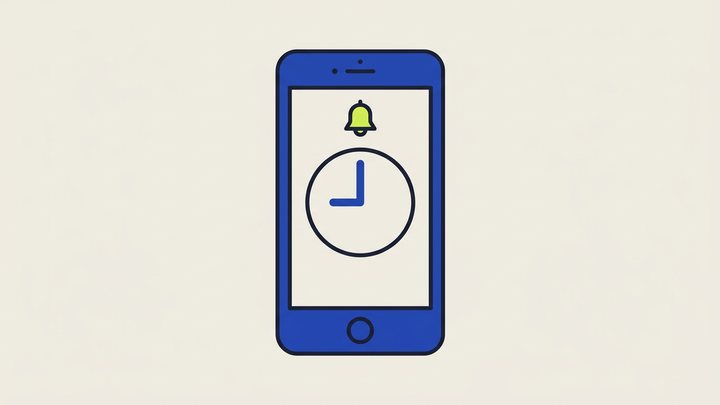
Ontario's Alcohol and Gaming Commission has put one principle at the centre of its iGaming rules: a player who is losing track of time and money must be given tools to notice it. The standards the Registrar publishes require every licensed operator to make information about financial and time-based limits available to all players. That obligation is not a suggestion tucked inside a responsible-gambling PDF. It is a condition of holding a licence in the only Canadian province with a regulated private-sector online casino market.
On this page 6 sections
The tool that turns the obligation into something a player actually sees mid-session is called a reality check. On a phone, where the screen fills your field of vision and the next spin is one tap away, the difference between a limit set silently in a settings menu and a pop-up that stops the action is the difference between a speed bump you drive around and a red light that makes you stop.
What a Reality Check Actually Shows
A reality check is a pop-up notification that interrupts a gambling session to display information a player may have stopped noticing. According to an explainer published by Dimers on responsible-gaming tools for Canadian online casino players, the notification can show time spent playing and the amount wagered during that session. Those two numbers — minutes and dollars — are the minimum payload. Some operators include the net result for the session, but the core function is straightforward: the screen freezes, the music or sound effects drop, and the player is handed a fact about what has just happened.
That is what separates a reality check from a deposit limit, a loss limit, or a session time limit. A deposit cap stops you from loading more money. A loss ceiling cuts off play after a certain amount is gone. A session timer logs you out when the clock runs down. All three are hard barriers. A reality check is a soft interruption: it does not end the session unless the player chooses to act on what it shows. It can be set to appear at regular intervals — the Dimers guide uses every 60 minutes as an example — and the player decides whether to continue, view their account history, or log out. The power is in the pause, not the prohibition.
The content of the pop-up is not standardised across every operator. Regulators in Ontario have not published a single mandated script for what the overlay must display, which means the exact wording, the presence or absence of a net-loss figure, and the available buttons vary. But the function is consistent enough that a player who opens an account with any Ontario-licensed site should expect to find the feature in the responsible-gambling section of their profile.
What Ontario Requires
The AGCO's Registrar's Standards for iGaming establish a framework that makes reality checks not just plausible but operationally required, even if they are not named in the text using that exact phrase. The standards state that operators must take a “systematic approach” to supporting informed player decisions and safer play. Responsible gambling material must explain how responsible gambling tools work, and information about financial and time-based gaming limits must be made available to all players.
The same layer of rules requires that information about self-exclusion programs be visible and accessible. The lottery-sector standards add that responsible gambling materials must include the number for Connex Ontario, the province's mental-health and addictions helpline. Another standard — section 11 of the iGaming-specific rules — says operators must have a mechanism in place to monitor and detect game and account transactions that may indicate signs of problem gambling. That monitoring obligation creates the data stream a reality check draws on: if the system is watching for problematic patterns, the reality-check pop-up is the part of that watchfulness the player actually sees.
The AGCO's guidance on supporting informed decision-making, last updated September 24, 2026, goes further. It says responsible-gambling material should include information about lower-risk gaming behaviours and how responsible gambling tools work. The variety of support services available to players should include “specialized information such as self-assessment and play management tools.” A reality check sits exactly at the intersection of those two requirements: it is a play-management tool that prompts self-assessment in real time.
The AGCO pages do not spell out the pop-up format by name, and the exact feature set Ontario demands from an operator's responsible-gambling toolkit is described in general categories — information, limits, self-exclusion, monitoring — rather than as a checklist of specific widgets. Operators building their platforms to meet those standards have converged on the reality check as the practical expression of the “systematic approach” the Registrar asks for.
How Casino Reminders Work
The mechanics are simple but the psychology matters. A player navigates to the responsible-gambling section of their account, often labelled “Play Management” or “Safer Play,” and sets a reality-check interval. The available intervals are set by the operator and listed on that screen. Once the timer is running, the system counts session duration from the moment play begins — not from login, and not from the last deposit. When the interval expires, the game screen is overlaid with a notification that displays the time elapsed and the amount wagered since the session started.
The Dimers explainer notes that the pop-up shows time spent playing and the amount wagered, which is a deliberate distinction from “amount won” or “amount lost.” Wagered means the total handle, the sum of every bet placed, which is almost always larger than a player's mental tally. A person who deposited $100 and spun 200 times at $2 a spin has wagered $400, and a reality check that displays that number is designed to puncture the illusion that only the deposit matters.
The monitoring requirement in AGCO's section 11 plugs into this. Operators must detect transactions that may indicate problem gambling. A reality check fired at 60 minutes with a wager total that surprises the player is one way that detection turns into an intervention. The player who sees $800 wagered in an hour and knows they deposited $200 gets a data point the game itself will never volunteer. The interruption is the delivery mechanism. Without the freeze-frame, the information exists only in a statement the player has to seek out later, when the session is already over and the money is gone.
Ontario and Provincial Tools
Ontario's regulated iGaming market, which launched in April 2022, is the only Canadian jurisdiction where private operators compete under a provincial licence. The AGCO standards apply to every one of them. Separately, the lottery sector — OLG's digital offerings — operates under its own set of Registrar's Standards, which include the same requirement that responsible-gambling materials and Connex Ontario's number be visible and accessible.
Provincial lottery corporations in other parts of Canada run programs like GameSense, developed by the British Columbia Lottery Corporation and licensed to other jurisdictions, and OLG's PlaySmart. These programs offer play-management tools, self-assessment quizzes, and staffed information centres at land-based venues. Which digital tools each provincial platform offers — a reality-check pop-up by that name, session time reminders or something else — is listed in the player-protection section of each site. The pattern across the country, however, is the same: lottery-operated sites and regulated private sites in Ontario both present responsible-gambling tools as a condition of operation, not a marketing feature.
The AGCO's guidance on supporting informed decision-making explicitly calls for information about lower-risk gaming behaviours and “how responsible gambling tools work” to be part of the material players see. That means a player logging into an Ontario-licensed app should not have to search for the reality-check setting. It must be findable, and the instructions must explain what the pop-up will do, when it will appear, and what the numbers mean.
Setting Limits on the Phone Itself
A casino's reality check works only inside the app and only when the player turned it on. The phone's own operating system offers a second layer that works across every app, regardless of whether the player opted in per account. This layer is not a substitute for in-account controls, but its value is that it cannot be dismissed with a single tap inside the casino interface.
Apple's Screen Time, accessed through Settings then App Limits then Add Limit, lets a user cap daily time for an entire app category such as Games. When the limit is reached, the phone blocks access to every app in that category unless the user enters a passcode. The interruption is system-level: a full-screen overlay that takes several deliberate steps to override. CNET's 2026 guide on phone settings notes that the path is the same whether the goal is curbing doomscrolling or capping a specific gambling app.
Android's Digital Wellbeing works similarly. The Verge's guide, published in November 2023, walks through opening Settings, tapping Digital wellbeing and parental controls, opening the screen-time graph, and tapping the hourglass icon next to a specific app to set a daily timer. CNET's September 2026 version of the same instructions confirms the path is unchanged. Android's timer shows a persistent notification in the app when time is running low and greys out the icon when the limit expires. A player who sets a daily cap on a casino app through Digital Wellbeing gets a warning before the app locks, and the lock itself requires a settings change to reverse — more friction than a casino pop-up's “continue” button.
Neither Apple nor Google provides a built-in “reality check” that mirrors a casino's mid-session pop-up with wagered-amount data. Phone-level tools deal only in time, not money. They do not know whether the app in use is a casino, a puzzle game, or a trading platform. That blindness is exactly why the two layers complement each other: the casino tool knows what is being spent, and the phone tool cannot be opted out of on impulse.
FAQ
Is a phone timer the same as a casino reality check? No. A phone timer blocks access to an app after a set duration; it does not show wagered amounts, session results, or any gambling-specific data. A reality check interrupts play inside the app and displays time and money information drawn from the operator's transaction monitoring. One is a wall, the other is a mirror.
Do phone limits replace operator tools? They do not. Ontario's Registrar's Standards require operators to make financial and time-based limit information and responsible-gambling tools available to players. A phone-level app cap cannot fulfill that obligation because it sits outside the operator's system and contains no gambling-specific data. A player who sets only a phone timer and never enables in-account limits has opted out of the protections the AGCO standards require the operator to provide.
What does Ontario actually mandate? The AGCO requires a systematic approach to informed decision-making, accessible information about limits and self-exclusion, responsible-gambling material that explains how tools work, and transaction monitoring for signs of problem gambling. The standards do not mandate a “reality check” pop-up by that name, but the functional requirements make some form of in-session interruption a practical necessity for any operator building a compliant platform.
The AGCO's guidance says players must be given information about lower-risk gaming behaviours and how responsible gambling tools work. A reality check is the moment that information stops being a page in the settings and becomes something that interrupts the spin. A phone's screen-time cap is the moment the interruption becomes a locked door. A player who uses only one has half a system.
Sources
- AGCO: Supporting informed decision making
- AGCO: Responsible gambling
- AGCO: Responsible gaming igaming
- dimers.com: Responsible gaming tools for canadian online casino players
- cnet.com: These are the best phone settings to use to stop doomscrolling
- theverge.com: Android phone digital wellbeing focus sleep how to
Rules, fees and app availability change. Check the current terms with your bank, your phone platform or the operator before you rely on them.
Keep reading
 Play safelyHow One Law Governs Casino Texts and a Completely Different Rule Governs the Pings From the Same AppThe promotional text message that lit up your phone at 2 a.m. is governed by a law that turned ten years old last July. Canada's…
 Play safelyLost Phone with a Casino Account: Remote Lock, Erase, and Freeze—What to Do in OrderThe first thing to do when a phone carrying a logged-in casino or betting app vanishes is mark the device as lost and, if…
 BankingYour Bank Didn't Say You're Broke. It Saw MCC 7995.A Canadian bank can decline an online casino deposit immediately after you tap confirm, while your chequing account holds four…