
Your Bank Didn't Say You're Broke. It Saw MCC 7995.
Updated: · MyMobiCasino editors
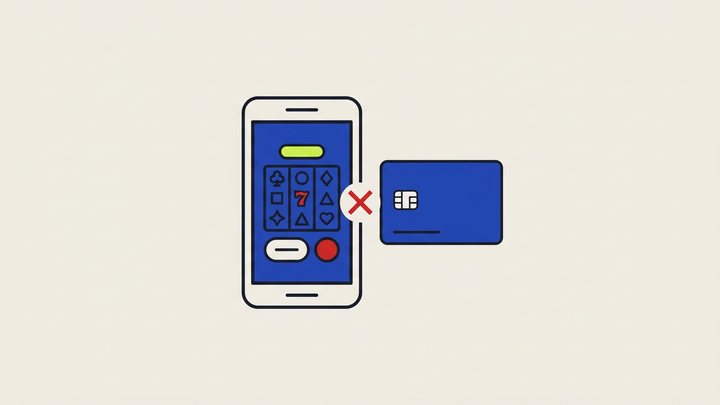
A Canadian bank can decline an online casino deposit immediately after you tap confirm, while your chequing account holds four figures and your credit card sits at thirty percent utilization. The funds are there. The bank simply refuses to move them. What the customer sees on a phone is a generic failure message: "transaction declined," "contact your card issuer," sometimes a generic error. What the bank saw was a four-digit integer in a field the customer never reads: 7995.
On this page 8 sections
That number is the merchant category code, or MCC, assigned to betting and casino gambling. When an online casino processes a deposit, it must tag the transaction with MCC 7995. The tag is mandatory in a card-absent environment, even if gambling is not the merchant's primary business. It travels with the authorization request like a warning label, and some Canadian issuers treat it as an instruction to stop.
A Four-Digit Code That Flags Every Wager
An MCC is not a hidden tracker or a phishing artifact. It is an ISO standard that every card-acquiring bank and payment processor uses so the card networks can classify the merchant for interchange pricing, reporting, and risk rules. The issuer sees it the instant a transaction hits the switch.
MCC 7995 covers lottery tickets, casino gaming chips, off-track betting, and wagers. Mastercard's Quick Reference Booklet names it "Gambling Transactions" and notes that it belongs to merchants that operate games involving wagering. The same booklet states that only a valid combination of MCC and transaction category code may be used in an authorization, which means the code is not decorative: it shapes how the network routes the request and what the issuer is permitted to do with it.
In card-present gambling, the merchant must apply MCC 7995 to those purchases. Online, the obligation is broader. An internet gambling merchant must use MCC 7995 for all transactions submitted through the card rails, even if the operator also sells non-gambling products. So the casino cannot split a deposit and a hotel booking across two codes to bypass the block. There is only one code for that merchant on that network, and it is the one that trips the filters.
Why the Issuer Says No, Even When the Balance Says Yes
The decline is not a balance decision. It is a category rule. A card issuer can decline any transaction it flags as gambling, coded under MCC 7995. The power sits with the issuer, not the casino, and not the customer.
Some Canadian issuers classify gambling as restricted regardless of the dollar amount. Others let the transaction through but reprice it as a cash advance rather than a regular purchase. National Bank of Canada defines a cash advance on a credit card explicitly as including "online lottery and gambling." That triggers two costs: a cash-advance fee and interest that begins accruing immediately, without a grace period. A purchase would get the card's interest-free grace period. A cash advance gets none.
A smaller set of issuers block the transaction outright. What is documented is that Mastercard and Visa treat the gambling MCC as high risk in their payment-processing frameworks, and that payment providers often mark gambling as a restricted category requiring special registration before a merchant can even accept cards. The iGaming operator faces stricter underwriting and added compliance scrutiny before its acquiring bank will open the pipe. If the processor has not cleared those hurdles, the transaction never reaches the issuer at all. The customer still sees a decline.
A phone-screen decline at the deposit step can therefore mean any of three things: the issuer has an MCC 7995 block; the issuer processed the charge as a cash advance and secondary rules stopped it; or the processor's acquiring bank never sent the request forward because the merchant's risk registration was incomplete.
What a Cash Advance on C$100 Actually Costs
The cash-advance reclassification is the trap most readers misunderstand. The deposit lands, the casino balance updates, and the customer assumes the purchase was ordinary. It wasn't.
When an issuer treats a gambling transaction as a cash advance, the charge carries the cash-advance fee set in your cardholder agreement, and the amount is charged the cash-advance interest rate rather than the purchase rate. Unlike a regular purchase, there is no interest-free window: interest runs from the day the advance posts. A customer who pays the statement balance in full still owes the fee plus the interest that built up before the payment.
The exact fee and rate differ by card, so the only reliable numbers are the ones in your own agreement, usually listed in the "interest rates and fees" box of the monthly statement. National Bank's help page says plainly that online lottery and gambling count as a cash advance on its credit cards; check whether your issuer's page says the same before you deposit with a credit card.
Other Reasons the Button Goes Grey
Not every decline is the code. Even when the issuer has no standing block on MCC 7995, the transaction can fail at the fraud screen. Processor-level controls flag repeated retries, address mismatches, device fingerprints, and velocity checks. A user tapping "deposit" four times in thirty seconds can trigger a fraud lock that has nothing to do with the category and everything to do with pattern matching.
Some processors treat gambling itself as a restricted line of business and will not route the authorization unless the merchant has completed a special registration process. If the registration lapsed or was filed incorrectly, the authorization dies at the gateway. The customer's phone never learns why, because the decline reasons that issuers and processors return are deliberately thin: too much detail helps fraudsters probe the fence.
A billing address that does not match the one on the card account can also stop a payment at the fraud screen. The phone is just the interface; the decision happens upstream.
What Actually Works
If the issuer blocks MCC 7995 or reprices it as a cash advance, the customer cannot override the rule by retrying, switching browsers, or lowering the amount. Those variables do not change the merchant code that tags the transaction.
The legitimate options are narrow. A customer can ask the issuer directly whether it blocks gambling transactions, though frontline agents often do not have the answer and may repeat the same decline message the customer already saw. The safer path is to use a payment method the issuer does not categorize: Interac e-Transfer sits outside the card rails and carries no MCC. Prepaid vouchers and some digital wallets may route around the issuer's credit-card rules, but the operator must support them on the deposit screen.
The practical conclusion is that a decline with funds available usually means the issuer has a policy on MCC 7995, and the customer's choice is a permitted method or no deposit. Repeated attempts do not solve the code. They only risk a fraud lock.
Does the Bank See the Code?
Yes. Every issuer sees the MCC on every authorization request, and the gambling code is one of the few that trigger automatic treatment rules even before the transaction reaches a human review queue.
Do Debit Cards Behave the Same Way?
A debit card rides different rails and carries different issuer rules, but the MCC is still present in the authorization. Some institutions may apply the same block.
Can You Disguise the Payment?
No legitimate method exists to re-code a gambling transaction as something else. The acquiring bank and the card networks enforce the MCC assignment. Attempting to circumvent the code with a miscategorized payment would violate the merchant agreement and likely trigger a suspension.
Sources
- Mastercard: Mastercard quick reference booklet merchant
- National Bank: How do I get a cash advance on my credit card?
- PXP: Merchant Category Code: Definition, How It Works
- PXP: MCC 7995 — Betting and Casino Gambling
- Finix: How iGaming Payment Processing Works
Rules, fees and app availability change. Check the current terms with your bank, your phone platform or the operator before you rely on them.
Keep reading
 BankingPay by Phone at an Online Casino? What Canadian Players Actually GetA Canadian player who clicks a “Pay by Phone” button at an online casino expects the deposit to land on next month's mobile bill…
 BankingPrepaid Vouchers at a Mobile Casino: The Withdrawal Problem Nobody MentionsA C$50 Flexepin voucher bought with cash at a Canadian corner store lets you fund a mobile casino in seconds using a 16-digit…
 BankingCasino Rejected Your ID Photo? Blame FINTRAC, Not the Upload ButtonIf an online casino in Canada refuses the snapshot of your driver's licence three times in a row, the problem is almost never a…